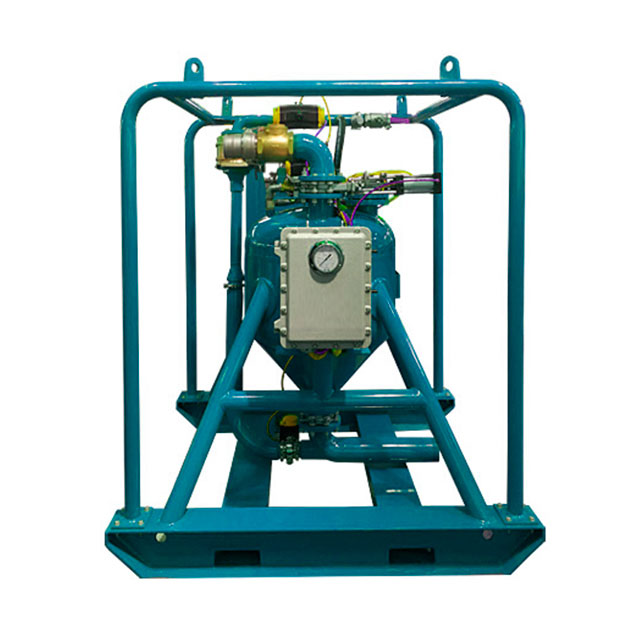
In modern oil and gas drilling operations, the vacuum degasser plays a critical role in maintaining drilling fluid stability. When gas invades the drilling mud, it reduces mud density, affects rheological properties, and may even lead to well control risks.
A vacuum degasser is designed to efficiently remove free gas from drilling fluid and restore its original performance.
In this article, we will explain how to use a vacuum degasser properly, including startup procedures, operating steps, precautions, and maintenance tips.
A vacuum degasser is a solids control device installed after the shale shaker. Its main function is to remove entrained gas from gas-cut drilling fluid using negative pressure.
When gas enters the mud system, it can cause:
Reduction in mud density
Pump cavitation
Poor separation performance of desander/desilter
Decreased centrifuge efficiency
Potential well control hazards
Installing a vacuum degasser helps ensure system stability and drilling safety.
In a standard drilling solids control system, the vacuum degasser is installed in the following sequence:
Shale Shaker → Vacuum Degasser → Desander → Desilter → Decanter Centrifuge
This layout ensures gas removal before fine solids separation, protecting downstream equipment.
Before starting the vacuum degasser, check the following:
Power supply and motor wiring
Vacuum pump condition
Belt tension (if belt-driven)
Mechanical seals
Inlet and outlet valves
Ensure suction pipe is submerged in mud
Proper inspection prevents mechanical damage and ensures stable vacuum performance.
Step 1: Turn on the main motor.
The vacuum pump begins creating negative pressure inside the tank.
Step 2: Check the vacuum gauge.
Normal working vacuum range:
-0.03 MPa to -0.05 MPa
If vacuum cannot reach this range:
Check for air leakage
Inspect seals
Verify vacuum pump condition
Step 3: Open the mud inlet valve.
Mud enters the vacuum tank where:
Gas rapidly expands under negative pressure
Gas bubbles break
Gas is discharged through the exhaust port
Degassed mud flows out from the bottom discharge outlet.
Monitor the following:
Continuous gas discharge from exhaust port
Stable vacuum level
Smooth mud flow
No abnormal vibration or noise
If no gas is discharged, the mud may have low gas content, which is normal.
Never operate the vacuum degasser without mud supply.
Dry running can damage:
Mechanical seals
Impellers
Vacuum pump
Immediately stop the machine if mud supply stops.
When drilling through gas-bearing formations, start the vacuum degasser early.
Waiting until mud density drops significantly may:
Affect well control
Reduce separation efficiency
Impact centrifuge performance
Degassed mud must flow freely to the next solids control stage to prevent overflow or pressure build-up.
A properly operated vacuum degasser helps:
Restore mud density
Improve pump performance
Increase desander and desilter efficiency
Protect decanter centrifuge
Reduce overall operational risk
It is especially critical in deep wells, gas wells, and underbalanced drilling projects.
To extend service life:
Regularly inspect mechanical seals
Check vacuum pump oil level
Clean exhaust pipeline
Avoid long-term idle operation without cleaning
Perform routine system inspection
Proper maintenance reduces downtime and improves reliability.
The vacuum degasser is an essential component of any drilling mud solids control system. Correct operation ensures efficient gas removal, stable mud performance, and safer drilling operations.
If you are looking for a reliable vacuum degasser for oil and gas drilling, choose a manufacturer with strong engineering support and proven field experience.