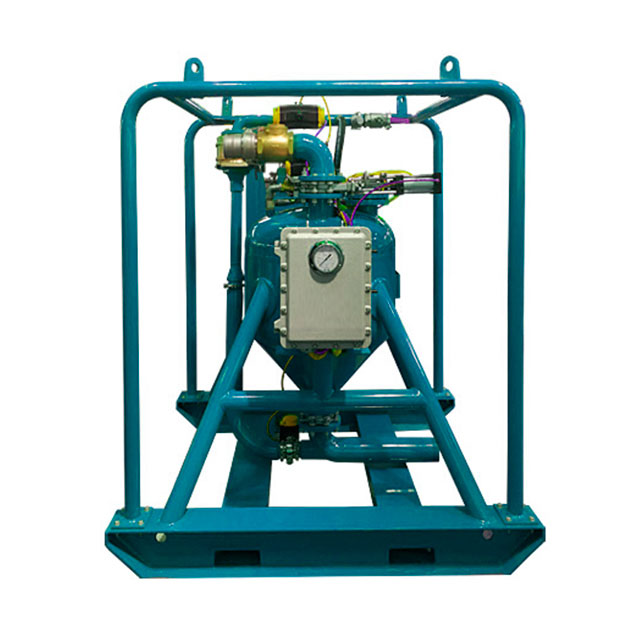
The difference between desander and desilter
There are some differences between desander and desilter in oil drilling in terms of function and the size of solid phase particles to be treated.
Desander:The desander is mainly used to remove larger sand, cuttings and solid particles from the drilling fluid. It typically handles larger particles ranging in diameter from 44 to 74 microns. The desander is located earlier in the solids control system, generally after the vibrating screen and before the desilter. The desander uses hydrocyclones and other devices, commonly used are 8", 10", and 12" hydrocyclones, to separate and remove larger solid particles from the drilling fluid.
 Desilter:
Desilters are primarily used to remove smaller particles and mud from drilling fluids. It typically handles finer particles between 15 and 44 microns in diameter. The desilter is located later in the solids control system, immediately after the desander. Like desanders, desilters also use hydrocyclones and other devices. Desilters are commonly used with 4” and 5” hydrocyclones to separate and remove finer solid particles from drilling fluid.
To sum up, the main difference between
desander and desilter in oil drilling is the size of the solid particles they process. Desanders are mainly used to remove larger solid particles, while desilters are used to remove smaller solid particles and mud. Their positions and functions in the solids control system are different, but they are all essential to ensure the cleaning and circulation of drilling fluid, which helps to improve drilling efficiency and ensure the safety of drilling operations.